 DeFi Market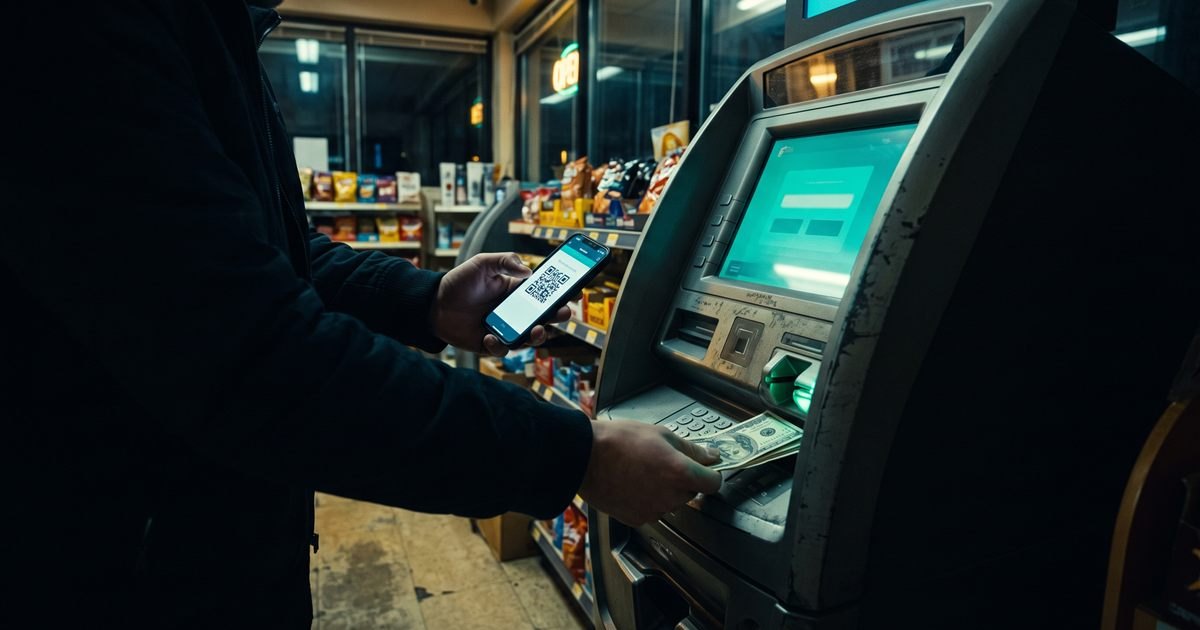
A Bitcoin ATM swaps your cash for Bitcoin and sends it to whatever wallet address you scan. It takes a few minutes, it usually costs a lot more than an exchange, and once the coins leave there's no getting them back. That last part is why scammers love these machines: Americans reported losing $388,981,267 through crypto kiosks to the FBI in 2025. If anyone tells you to pay at one, it's a scam.
How does a Bitcoin ATM work, step by step?
Despite the name, a Bitcoin ATM isn't a bank machine. It's a kiosk that sells you Bitcoin for cash, usually in a gas station, convenience store or mall. Most only sell. Some also buy Bitcoin back and pay out cash.
- Get a wallet first. The machine doesn't hold your coins. You need your own Bitcoin wallet app, which shows a QR code for its receiving address.
- Verify yourself. Small purchases often need only a phone number and a text code. Larger ones ask you to scan a driver's license or ID, and the cutoff varies by operator and state.
- Scan the QR code. The machine reads the wallet address the coins will go to.
- Feed in cash. The screen shows how much Bitcoin you're getting for it.
- Confirm. The Bitcoin goes out to that address, usually within minutes. There's no undo button.
Selling works in reverse on two-way machines: you send Bitcoin to an address the kiosk shows you, and it pays out cash once the transfer confirms.
How much does a Bitcoin ATM charge?
More than the screen makes obvious. Most operators build their fee into the exchange rate, so you see "you'll receive 0.0012 BTC" rather than a fee line. Compare the rate on the screen with the price of Bitcoin on any exchange app and the gap is the fee.
How big is it? There's no neutral national study, but the states that capped it tell you where operators were charging. California and Iowa cap kiosk fees at 15%. Illinois caps them at 18%. In a lawsuit filed in 2025, the District of Columbia's attorney general accused one operator, Athena Bitcoin, of charging undisclosed fees as high as 26%. On an exchange, buying the same Bitcoin typically costs a percent or two.
Bitcoin ATM limits by state in 2026
Lawmakers have moved fast, almost all of it in the last two years.
| Where | Rule | Fee cap |
|---|---|---|
| California | $1,000 per person per day | 15% or $5, whichever is greater |
| Iowa | $1,000 per day, required warnings, refunds for some scam victims (since 1 July 2025) | 15% |
| Illinois | $2,500 a day for new customers, $10,500 for existing ones (since August 2025) | 18% or $5 |
| Minnesota | Banned statewide from 1 August 2026; machines out by 31 December 2026 | n/a |
| Albuquerque, NM | City ban approved 10 September 2026 | n/a |
| Spokane and other Washington cities | City bans, 2025 and 2026 | n/a |
AARP counts 29 states with kiosk laws of some kind, and Indiana and Tennessee also passed bans this year. In Congress, the Crypto ATM Fraud Prevention Act would cap new users at $2,000 a day. It was introduced in February 2025 and is still in committee.
Prefer to watch? How the machines work, and the scam, in 53 seconds.
Are Bitcoin ATMs safe? The scam script
The machines do what they say. The danger is who's telling you to use one. The FTC found the same three stories behind most losses: someone posing as the government (the IRS, a sheriff's office, the FBI), someone posing as a business (your bank's fraud team, Amazon), or a fake tech-support agent who says your computer has been hacked.
The script is always urgent. Your bank account is compromised, there's a warrant out, your money must be "moved to safety" today. Then comes the trick: they send you a QR code and tell you to scan it at the kiosk. That QR code is their wallet, not yours. The FTC's 2024 study put the median loss at $10,000. In the FBI's 2025 numbers, people over 50 filed more than half the complaints and lost more than $302 million.
⚠ Red flag
No bank, government agency or police department will ever ask you to pay at a Bitcoin ATM. Not to "protect" your savings, not to pay a fine, not to clear a warrant. If someone stays on the phone with you while you feed cash into a kiosk, hang up. That's the scam, every time.

Rob's take
I live about 35 miles south of Albuquerque, which voted this September to ban these machines. When a city council in a place this practical decides a product should go, it's because the people walking up to those kiosks were mostly being walked there by someone on the phone. Iowa's and DC's investigators found more than 90% of the transactions they reviewed were scams. If you want Bitcoin, use a regulated exchange. It's cheaper, and nobody can talk you into scanning their code.
I sent money through a Bitcoin ATM to a scammer: what now?
- Call the kiosk operator right away. Their phone number is on the machine and your receipt. Iowa's law now requires refunds in some scam cases, and operators sometimes freeze funds that haven't moved yet.
- Report it to the FBI at ic3.gov and to the FTC at ReportFraud.ftc.gov. Include the receipt, the wallet address and any texts or call logs.
- Call your local police and get a report number. Your bank and the operator may ask for it.
- Expect a second scam. "Recovery services" that promise to get your Bitcoin back for a fee are a known follow-up. Don't pay them.
If you do decide to buy Bitcoin, read hot wallet vs cold wallet before you pick where to keep it, and keep the rug pull checks handy before you buy anything newer than Bitcoin.