 DeFi Market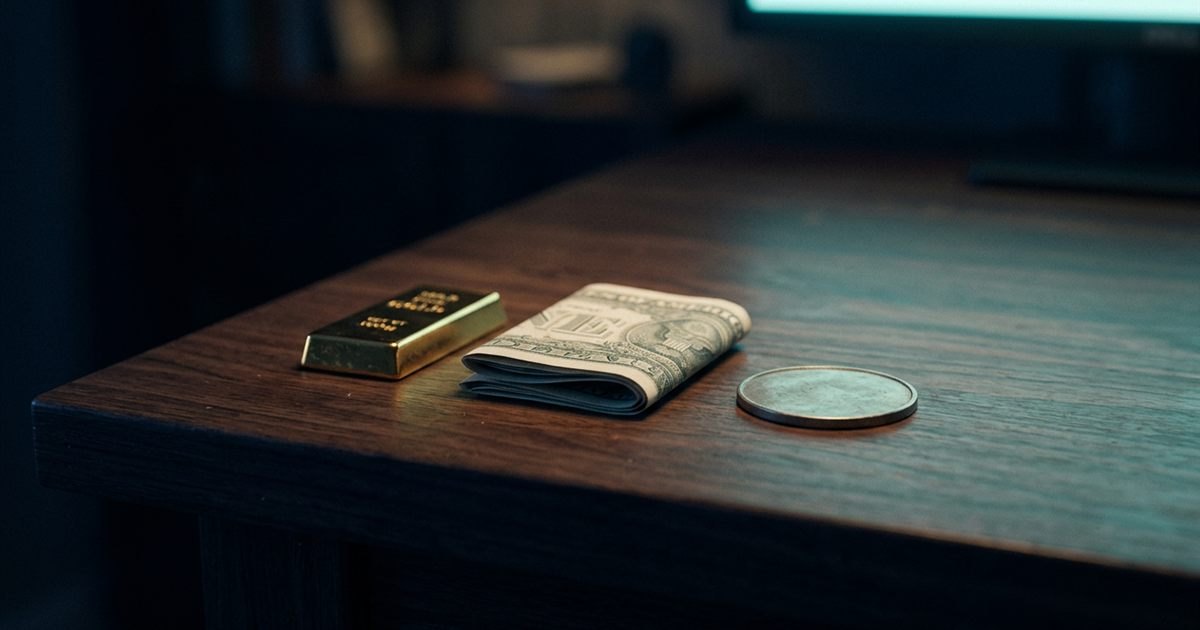
How does Bitcoin have value if nothing backs it? The same way anything does: enough people want it, and the supply is limited. What makes people want it is specific: the supply is capped at 21 million coins, the ledger is very expensive to cheat, you can hold it yourself without a bank, and it's now easy to buy and sell, including through US funds. The honest catch: it pays no interest and no dividends, so its price rests on demand alone, and critics at the European Central Bank say its fair value is zero.
No coin tips. DMJ doesn't tell you to buy Bitcoin, and this page makes no price predictions.
Is Bitcoin backed by anything?
No. There's no vault, no company earnings, no government guarantee. Bitcoin's own FAQ at bitcoin.org says it's "backed by mathematics." Nice line. What it really means is that the rules are enforced by software and by thousands of computers checking each other's work.
That sounds thin until you look at the dollar in your wallet. The Federal Reserve says its notes are not redeemable in gold, silver or any other commodity, and haven't been since 1934. The Fed does hold collateral against the notes it issues, mostly Treasury and federal agency securities. So the dollar has something behind it, and that something is government debt, with the supply run by a central bank. It works because people trust it. Bitcoin asks for the same trust, aimed somewhere else.
Where does Bitcoin's value come from?
Four things, and they lean on each other.
1. Scarcity. Bitcoin's FAQ says only 21 million will ever be created, and the number of new coins is cut in half on a schedule until issuance stops. Under Bitcoin’s code, those cuts come every 210,000 blocks, roughly every four years. The last one, in April 2024, dropped the reward for each new block from 6.25 to 3.125 bitcoin, as CNBC reported at the time. Raising the cap would mean persuading the people who run the software to accept a version that dilutes their own coins. Compare gold. The World Gold Council puts all the gold ever mined at about 222,600 tonnes as of mid-2026, and mines dig up more every year. Bitcoin's schedule doesn't change with the price at all.
2. It's expensive to cheat. Satoshi Nakamoto's 2008 whitepaper says the system stays secure as long as honest computers control more processing power than any group of attackers. To rewrite Bitcoin's history you'd have to outspend all of them. That spending is enormous. The University of Cambridge estimated in April 2025 that Bitcoin mining uses 138 TWh of electricity a year, about 0.5% of the world's consumption. Critics call that waste. It's also the wall around the ledger. Both can be true.
3. You can hold it yourself. The whitepaper's first line describes cash that moves between people without going through a financial institution. If you hold your own keys, no bank can freeze the account or close it on you. That matters most to people who don't trust their bank or their currency. It also means nobody can help you if you lose the keys, which is why hot wallet vs cold wallet is worth reading before you buy.
4. Liquidity and adoption. Something you can sell fast, any hour, is worth more than something you can't. Bitcoin trades around the clock, and in January 2024 the SEC approved US spot Bitcoin funds you can buy in an ordinary brokerage account. One of the largest, the iShares Bitcoin Trust, reported $66.3 billion in net assets on 9 October 2026, according to BlackRock's iShares fund page. That's one fund. The US government holds some too. Executive Order 14233, signed 6 March 2025, set up a Strategic Bitcoin Reserve filled with bitcoin the government already held from forfeiture cases. It didn't buy them, and any extra bitcoin must come through strategies that are "budget neutral."
Under all four sits the oldest reason, shared belief. A dollar, a gold bar and a bitcoin all carry the value people agree they carry. The dollar has a government enforcing that agreement. Bitcoin has code and a crowd.
| What gives it value | But |
|---|---|
| Fixed supply of 21 million | Scarcity doesn't create demand |
| No single party can print or freeze it | An exchange can still freeze your account |
| Expensive to attack | The electricity use is real |
| Easy to sell, including through US funds | Demand can fall as fast as it rose |
| You can hold it yourself | Lose the keys and it's gone |
Bitcoin vs the dollar vs gold
| US dollar | Gold | Bitcoin | |
|---|---|---|---|
| What stands behind it | Fed collateral, mostly government securities; not gold since 1934 | Nothing; the metal itself | Nothing; the network and its rules |
| Who sets the supply | The Federal Reserve | Miners, a little more each year | Fixed schedule in the software |
| Supply limit | None | None, but slow to grow | 21 million |
| Pays income by itself | No | No | No |
| Uses besides money | Pays taxes and debts in the US | Jewelry, industry | Very few |
Look at the income row. None of the three pays you to hold it. You earn interest when you lend dollars to a bank, not from the bill in your pocket. Gold has carried value for thousands of years on demand and some practical use. Bitcoin has carried it for more than 15 years on demand alone.
Prefer to watch? The four reasons, and the counterpoint, in 51 seconds.
The case against Bitcoin's value
Most pages ranking for this question come from companies that sell or service Bitcoin. So here are the skeptics, in their own words.
"Fair value is zero." On 22 February 2024, a month after the US funds launched, two senior European Central Bank officials, Ulrich Bindseil and Jürgen Schaaf, wrote that "the fair value of Bitcoin is still zero." Their reason: "without any cash flow or other returns, the fair value of an asset is zero." They added that Bitcoin "is not suitable as means of payment or as an investment." The ECB notes that its blog views are the authors' own, not necessarily the bank's.
"Speculative, volatile." The SEC chair who cleared those funds on 10 January 2024, Gary Gensler, said the agency "did not approve or endorse bitcoin" and called it "primarily a speculative, volatile asset that's also used for illicit activity."
"Just like gold." Fed Chair Jerome Powell sits in the middle. At the New York Times DealBook Summit on 4 December 2024, he said people use bitcoin "as a speculative asset" and that "it's just like gold, only it's virtual, it's digital," as NBC News and others reported. He also said it's "not a competitor for the dollar, it's really a competitor for gold."
The skeptics have a point. A stock has profits behind it, a bond has interest, a rental house has rent. With Bitcoin, the price is whatever the next buyer will pay. The cap doesn't protect you here. Scarce things nobody wants are worth nothing. What's true either way: Bitcoin has traded at a market price for more than 15 years, and that price has fallen hard more than once.
⚠ Red flag
"Only 21 million, so it can only go up" is a sales line, and scammers love it. Scarcity doesn't guarantee a price. Anyone who promises Bitcoin returns, offers to double your coins, or rushes you to buy before "the supply runs out" is selling you something else. The same line sells fake phone mining apps and "pay this fine at a Bitcoin ATM" calls.

Rob's take
I got my first Bitcoin in 2011. Back then the honest answer to "what gives it value?" was a few thousand people on forums who agreed it did. Fifteen years later there's a lot more weight behind that agreement: funds, laws, a network that uses about half a percent of the world's electricity to guard itself. But the root hasn't changed. It's worth what people will pay, and people change their minds. So I've never put in money I couldn't watch fall by half and sleep that night.
Price vs value: why Bitcoin swings so hard
Value is why people want something. Price is what the last buyer paid. With a stock, profits pull the price back toward some anchor over time. Bitcoin has no profits, so its price moves with how many people want it this week, and that changes with interest rates, fund flows, fear and headlines. A fixed supply makes the swings bigger, because no one can issue more coins to meet a rush of buyers or take coins away when buyers leave. Anyone who tells you Bitcoin is guaranteed to hold its value, or guaranteed to hit zero, is guessing. For the forces behind the day-to-day moves, read what moves Bitcoin's price.
Bitcoin value FAQ
What is Bitcoin backed by?
Nothing physical and no government. Its supply rules are enforced by software and by thousands of computers checking each other's work. The dollar isn't backed by gold either. The Federal Reserve says its notes haven't been redeemable in gold since 1934.
Does Bitcoin have intrinsic value?
That's contested. Bitcoin pays no interest, dividends or rent, which is why two ECB officials argued in February 2024 that its fair value is zero. Supporters point to its fixed supply and its use as money nobody can freeze. Both sides agree its price rests on demand.
Could Bitcoin go to zero?
Nobody can rule it out, and nobody can predict it. If people stopped wanting it, nothing like earnings or a government guarantee would hold the price up. It has fallen hard more than once and come back each time so far, which proves nothing about next time.
Why is Bitcoin limited to 21 million?
The limit is written into Bitcoin's software, and the reward for new coins is cut in half every 210,000 blocks until issuance stops. Changing it would need the people who run the network to accept software that dilutes their own coins.
Does the US government own Bitcoin?
Yes, some. Executive Order 14233, signed 6 March 2025, created a Strategic Bitcoin Reserve from bitcoin the government already held through forfeiture. Any further bitcoin must come through strategies that are budget neutral for taxpayers.
Is Bitcoin like gold?
Fed Chair Jerome Powell said in December 2024 that it's just like gold, only virtual and digital, and a competitor for gold rather than the dollar. Neither has a central issuer or pays income. Gold has industrial and jewelry uses and thousands of years of history. Bitcoin has few uses besides money.