 DeFi Market
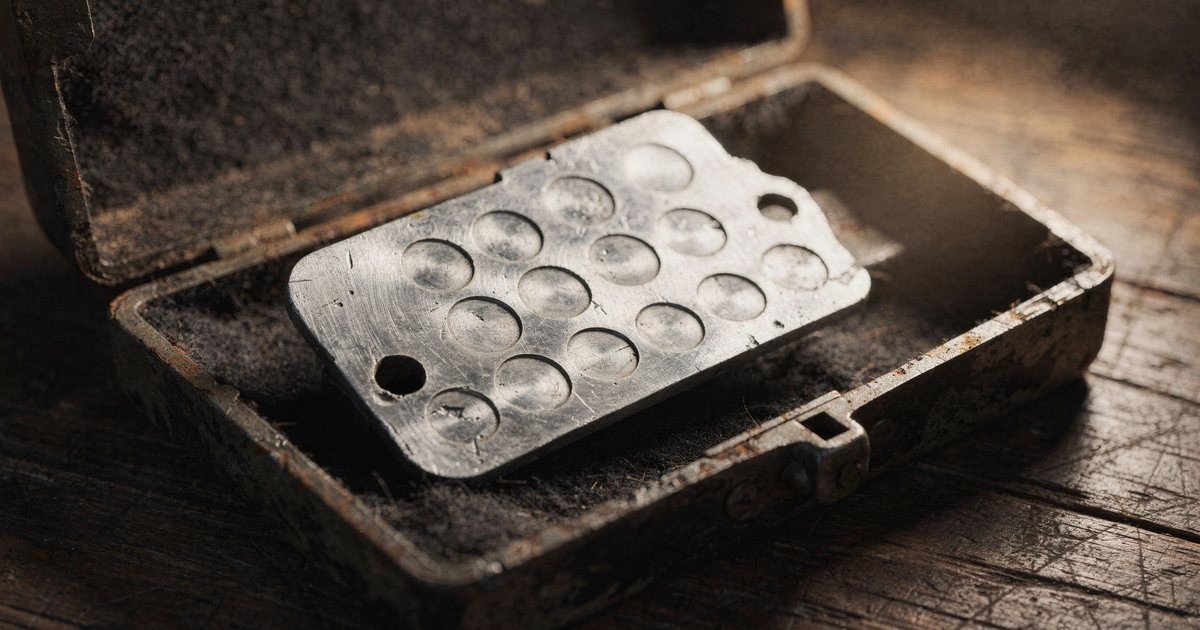
In 2023, security researchers traced more than $35 million in stolen crypto to people who had all made one choice about how to store a seed phrase: they kept it in a password manager that was later breached. The plain answer is to write the words by hand on paper, or stamp them into steel, and keep at least two copies in different places. Don't photograph it, type it into a cloud note or email it to yourself. Then test that the backup actually restores your wallet.
Why storage matters more than the wallet
A seed phrase, also called a recovery phrase, is 12 or 24 words drawn from a fixed list of 2,048, set out in the BIP-39 standard. Every private key in your wallet is worked out from those words. If you want the mechanics, our guide to public keys vs private keys explains them.
What matters here is the consequence. Anyone who reads the words owns the wallet. Anyone who loses the words, with no other copy, loses the wallet. There's no reset link and no help desk. So a backup has two jobs that pull against each other: it has to be hard for a thief to find and hard for you to lose.
The case in the opening shows how badly the first job can fail. KrebsOnSecurity reported in September 2023 that researchers had tied thefts from more than 150 victims, worth over $35 million, to a common thread. Nearly all of them had stored seed phrases in LastPass, whose customer vaults were stolen in a 2022 breach. Thieves appear to have cracked the weaker vaults one by one.
How to store a seed phrase: the options compared
Here's how the common choices stack up against the three things that take seed phrases: thieves, disasters and forgetfulness. No product is named, because none of them is required.
| Method | Fire and flood | Theft and leaks | Good for |
|---|---|---|---|
| Handwritten paper, one copy | Poor. Burns, fades, turns to pulp | Offline, so no hackers. Anyone in the house can read it | A first backup while you set up something sturdier |
| Handwritten paper, two or three copies in separate places | Better. One disaster rarely hits every location | More copies means more places to guard | Most people with modest holdings |
| Stamped or engraved steel | Strong. Steel doesn't burn or rot | Same as paper. A plate is readable by whoever finds it | Long-term storage, homes in fire or flood areas |
| Seed plus a passphrase (a "25th word") | Depends on how both are stored | A found seed alone doesn't open the wallet | Larger holdings, if you'll remember or back up the passphrase |
| Multisig or a proper share scheme | Strong, if shares are spread out | No single paper or plate opens the wallet | Large holdings, with more setup and more to explain to heirs |
| Password manager | Survives a house fire | Online. One breached vault and weak master password away from theft | A debate. See below |
| Photo, screenshot, cloud note, email | Survives a house fire | The worst option. Synced, scanned and searchable | Nothing |
Paper: fine, if you do it carefully
Paper is where nearly every wallet starts you, and it's a reasonable first step. A few habits make it much sturdier.
- Write by hand. Don't type the words into a computer to print them. Printers and computers can keep copies.
- Number each word. Order matters. A list of 24 correct words in the wrong order won't restore anything.
- Check every word against the list. Each word appears on the BIP-39 list, and the first four letters are enough to identify it. If your handwriting turns "deer" into "door," your heirs may not know which you meant.
- Keep it dry. A sealed plastic sleeve helps against spills and damp. It won't help in a real fire.
Floods are a bigger risk than most people think. FEMA's 2023 flood protection brochure says just one inch of water can cause $25,000 in damage to a home. Basements and bottom drawers, where people tend to hide things, are the first to go under.
Steel: what metal buys you
Steel plates and capsules solve the fire and flood problem. You stamp or engrave each word, or the first four letters of each, into metal that doesn't burn or rot. Plenty of sellers post dramatic torch tests. Those are their tests, though, not independent ones, so treat the claims as marketing until you see the conditions.
A home safe is a different tool, and the label matters. Under the UL 72 standard, a safe rated Class 350 must keep its interior below 350°F while the furnace outside climbs, to 1,700°F for a one-hour rating, according to UL's product category guide. Class 350 is the rating meant for paper. A box that's merely "fire resistant" with no UL class has made no checkable promise. Paper inside a rated safe, or steel anywhere sensible, both beat paper in a desk drawer.
How many copies, and where to keep them
Two or three copies in different buildings is the usual answer. One disaster, whether a fire, a flood or a burglary, shouldn't be able to reach every copy. Common pairs are home plus a relative's home, or home plus a bank box.
Know what a bank box is and isn't. The FDIC says plainly that safe deposit box contents aren't covered by deposit insurance, and that you shouldn't expect the bank to repay you for theft or damage. Access also depends on bank hours and, after a death, on paperwork. It works as one location. It's a poor only location.
Then there's splitting. A popular tip is to cut the phrase in half and keep words 1 to 12 in one place and 13 to 24 in another. Think that through before you do it. You now need both halves to recover, so you've doubled the ways to lose the wallet, and each half still tells a finder a lot. If you want no single piece of paper to open your wallet, use a method built for it, like a passphrase stored apart from the seed, multisig, or a proper share scheme in which any two of three shares work. Each adds complexity, and complexity is how backups fail.
What never to do, and the password manager debate
Photos are the clearest no. In February 2025 Kaspersky found apps in Google Play and Apple's App Store that quietly scanned people's photo galleries for screenshots of recovery phrases. Its researchers counted more than 242,000 downloads on Google Play alone, as described in its SparkCat report. Photos also sync to the cloud, where a single stolen login exposes them. The same goes for notes apps, cloud documents, email drafts and messages to yourself.
Password managers are a real debate, and we'd rather state it honestly than pretend it's settled. In favor: a good one encrypts your vault, survives a house fire, and is far better than a camera roll. Kaspersky's own advice after SparkCat was to keep phrases in a password manager instead of your gallery. Against: it puts your entire wallet one breach and one weak master password away from a stranger, which is what happened to the LastPass victims. In March 2025 KrebsOnSecurity reported that federal agents had tied a roughly $150 million theft to the same breach. LastPass says it has seen no definitive proof of that link.
Our view: for a wallet you'd hate to lose, keep the phrase off anything connected to the internet. If you use a password manager anyway, use a long, unique master password and turn on two-factor login.
⚠ Red flag
No wallet maker, exchange, support agent or government agency will ever ask you to type your seed phrase into a website, a form or a chat. Scammers on the phone ask anyway; our guide to crypto scam call scripts shows how those calls go. Storing it well means nothing if you hand it over. If you've already typed it somewhere, read what to do when your seed phrase is compromised now.
Prefer to watch? How to store a seed phrase, in under a minute.
Test the backup before you trust it
A backup you've never restored is a guess. Here's a way to check yours without exposing it.
- Write down your first receiving address. Copy it from your wallet app or hardware wallet now, while everything works.
- Restore on a device you control. Many hardware wallets have a check or recovery-test mode that reads the words back without making a new wallet. Otherwise, restore onto a wiped hardware wallet. Never type the words into a computer or phone browser to test them.
- Compare the address. If the first address matches, the words, their order and any passphrase are right.
- Check every copy. A typo on copy two is easy to miss until copy one is gone.
- Repeat after any change. New passphrase, new location, new device: test again.
If you bought a hardware wallet secondhand or from an unofficial seller, or it arrived with words already filled in, don't use it at all. Our hot wallet vs cold wallet guide covers buying one direct from the maker.

Rob's take
I've had Bitcoin since 2011, long enough to have seen both ways this goes wrong. People who hid their words so well that nobody, including them, could find them. And people who saved a screenshot because it was quick. Out here in Belen, New Mexico, my bigger worry is the dumb disasters: a kitchen fire, a burst pipe. Two copies, two buildings, tested once. That's not exciting, but it covers most of the ways I've seen people lose coins.
Not sure whether a site, a message or an offer is a scam? Our is this a scam? quiz takes a minute, and the Scams hub has every guide in one place.
Want the scam warning signs on paper too? Get all three free scam checklists when you join the Sunday Briefing.
Who can find it if you can't?
Every storage plan above assumes you're around to use it. The hardest version of the question is the one people skip: if you died tomorrow, would anyone know the words exist, where each copy is, and that a passphrase goes with them? Would they know not to type them into the first "recovery service" that emails them? A backup that only you can find protects the coins from your family as well as from thieves. Our guide on what happens to crypto when you die covers how to leave instructions without leaving the keys out in the open. So which person in your life could find your seed phrase today, and should they be able to?
Seed phrase storage FAQ
Where should I store my seed phrase?
There's no single right answer, but the common ground is clear: write it by hand on paper or stamp it into steel, and keep two or three copies in different buildings. Keep it off phones, computers and the cloud. Then test that the backup restores your wallet.
Can I store my seed phrase in a password manager?
You can, but it's a trade-off. A password manager is far better than a photo, but it puts your wallet online, one breach and one weak master password away from theft. Researchers tied over $35 million in thefts to seed phrases stored in LastPass vaults stolen in 2022.
Is it OK to take a photo of my seed phrase?
No. Photos sync to the cloud and can be read by malicious apps. In 2025 Kaspersky found apps in both major app stores that scanned photo galleries for recovery phrase screenshots. Delete any photo you have, including from cloud trash.
Should I keep my seed phrase in a safe deposit box?
It can work as one of two or three locations, not the only one. The FDIC says box contents aren't insured and banks generally don't repay theft or damage. Access also depends on bank hours and, after a death, on legal paperwork.
Should I split my seed phrase into two halves?
Usually not. Splitting means you need both halves to recover, which doubles the ways to lose the wallet, and each half still helps a thief. If you want no single copy to open the wallet, use a passphrase, multisig or a proper share scheme instead.
Is paper or metal better for a seed phrase?
Metal survives fire and water far better than paper. Paper is fine as a start if you keep copies in separate places and away from damp. A home safe rated UL 72 Class 350 is built to keep paper below 350°F during a fire.
New to all this? Our free course Scam-Proof in 7 Days walks you through the checks one short lesson at a time.