 DeFi Market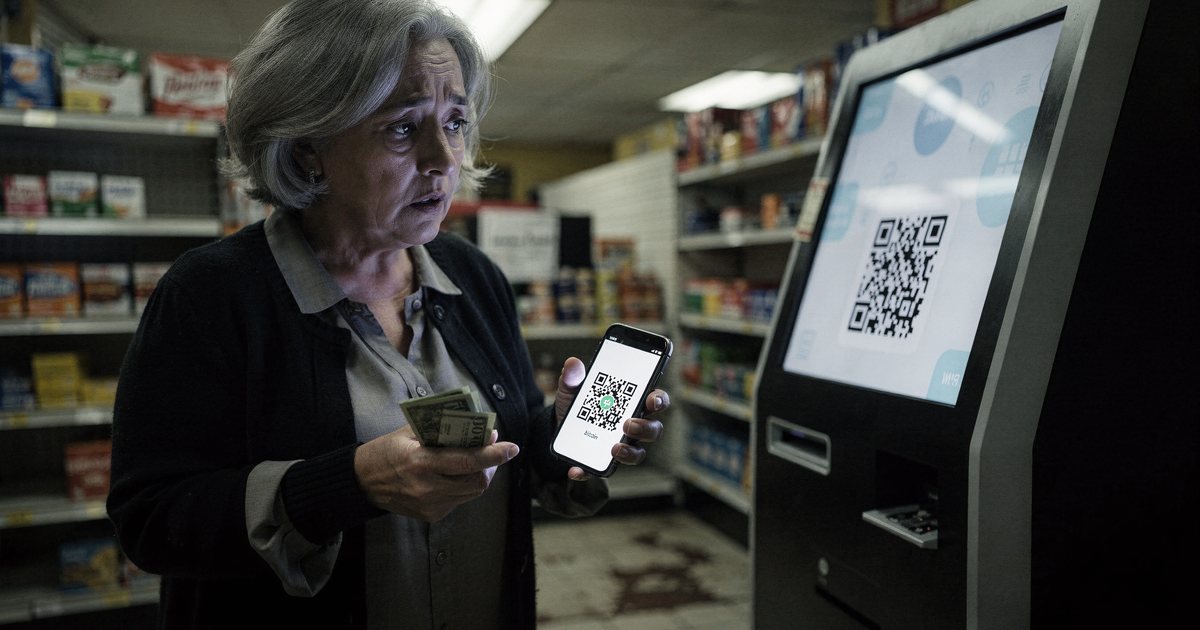
Americans filed more than 13,400 complaints about scams that used crypto ATMs in 2025, reporting losses of over $388 million, according to the FBI. More than half came from people over 50. The script almost never changes, and neither does the rule: anyone who tells you to pay at a Bitcoin ATM is a scammer.
How the scam works
A caller says they're from the government, your bank, the power company, or tech support. Sometimes it's a new sweetheart from online. They keep you on the phone, walk you to the bank to take out cash, then to a store or gas station with a crypto ATM. They text you a QR code. You scan it, feed in the cash, and the money goes to their wallet. There's no undo button.
Why ATMs
A bank transfer or a card payment has fraud checks and can sometimes be reversed. A crypto ATM deposit to someone else's wallet usually can't. The FTC has warned about this exact trick, a QR code, an impersonator and a trip to a crypto ATM, since 2022. It's still working.
Who gets hit
The FBI says complaints from people over 50 accounted for more than $302 million of the losses. Texas reported the most money lost, nearly $57 million. Some states have now put daily limits on crypto ATMs for new users. Our Bitcoin ATM guide covers how the machines work, what they really charge, and the limits where you live.
What to do
- No real agency, utility or bank takes payment at a Bitcoin ATM. None.
- If a caller keeps you on the line while you go get cash, hang up.
- Call the company back on the number from its own website, not the one they gave you.
- If it already happened, report it at ic3.gov and to your local police, and keep your receipts.
Who in your family should see this? Send it to them.
Sources: FBI figures via BleepingComputer, The Block, The Record, FTC consumer alerts.