 DeFi Market
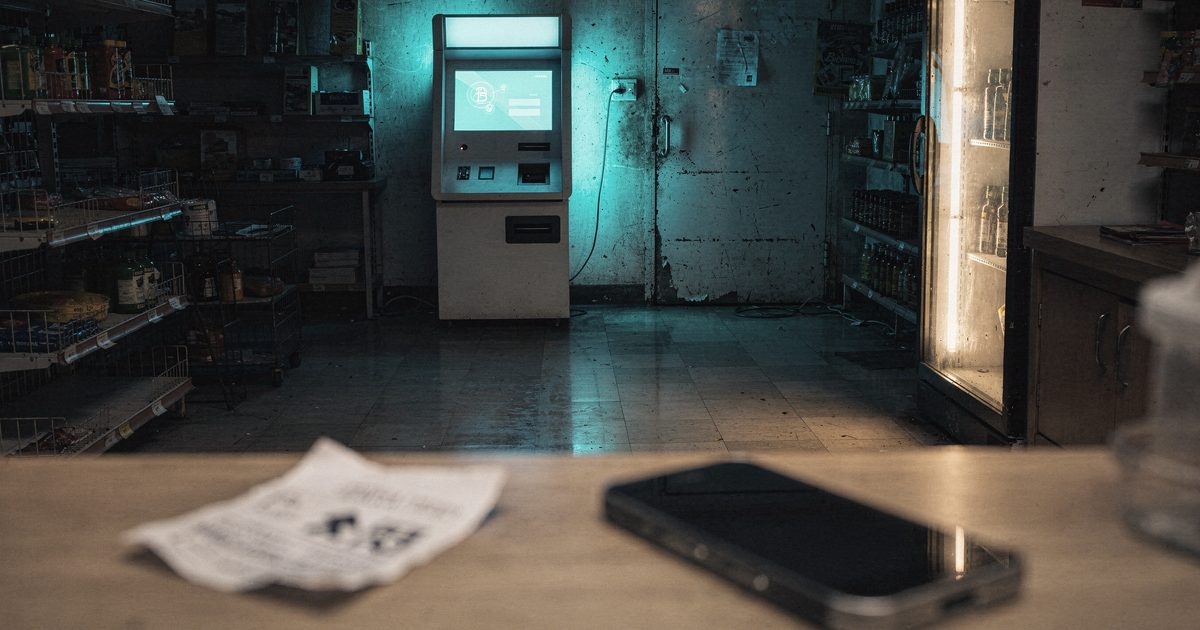
Lost money to a bitcoin ATM scam? You can sometimes get it back, but only if you move fast. Once the cash went in, the crypto went straight to the scammer's wallet, and the machine can't pull it back. What can work is a refund from the ATM operator, and a growing number of states now require one for scam victims, usually first-time customers who report within 14 to 90 days. Today: call the operator, file a police report and get the report number, and report to your state.
Can you get money back from a bitcoin ATM scam?
Sometimes. It depends on three things: which state the machine was in, whether you were a new customer of that operator, and how fast you report it.
The hard part first. The machine turned your cash into crypto and sent it to an address the scammer gave you, usually as a QR code. That transfer can't be reversed by you, the store or the operator. The FTC says you can usually only get crypto back if the person you paid sends it back. So the realistic routes are a refund paid by the operator out of its own pocket, a state settlement, or, rarely, a freeze if police trace the coins to an exchange.
The scale explains why states stepped in. The FBI's May 2026 alert counted more than 13,400 complaints involving crypto kiosks in 2025, with losses over $388 million, up 58% from 2024. More than half came from people over 50, who lost over $302 million.
What to do in the first 24 hours
- Stop paying and hang up. If the caller is still on the line, end it. Don't go back to the machine, even if they say one more deposit will "release" the first one.
- Find your receipt. It has the time, the amount, the wallet address and the operator's name. If you didn't keep one, write down the store address and time now. The operator can look it up.
- Call the operator. Use the support number printed on the machine or the receipt, not one the scammer gave you. Say the transaction was a scam, ask for a refund in writing, and ask them to flag the wallet address. Write down who you spoke to.
- File a police report and get the report number. Most state refund laws require a report to police or a state agency, and operators ask for the number. Arizona's attorney general says a law enforcement report is part of its process.
- Report to your state. Usually the attorney general or the agency that licenses kiosks. Some states run the refund claim through that agency. The table below says which one.
- Report to the FBI and FTC. File at ic3.gov and ReportFraud.ftc.gov. They don't trigger a refund, but they help match traced money to victims.
- Call your bank. If the cash came from a withdrawal the scammer coached you through, tell the bank's fraud team. If anyone has your card or online banking details, lock them down.
Our guide on how to report a crypto scam covers each federal form and what to put in it.
Which states require bitcoin ATM refunds?
Checked 17 October 2026. These rules change fast, so confirm with the state agency before you rely on a date. Most laws give a full refund only to a "new customer," meaning someone in their first days or first few transactions with that operator. That's on purpose: scam victims are usually first-timers sent to a machine they'd never used.
| State | Status | Who gets a refund | Report within |
|---|---|---|---|
| Arizona | In effect since 26 Sept 2025 | New customers: full refund, including fees | 30 days, to the AG or local police |
| Iowa | In effect since 1 July 2025 | New customers (first 30 days with that operator): full refund | 90 days, to the operator and a government or police agency |
| Nebraska | In effect since 3 Sept 2025 | New customers: full refund, including fees. Existing: fees only | 30 days, to the operator and police or a state agency |
| Connecticut | Public Act 25-66 | New customers: refunds for qualifying transactions in their first 72 hours | Ask the Department of Banking (1-800-831-7225) for the deadline |
| Alabama | In effect since 1 Oct 2026 | The law includes refunds for fraud victims; ask the Alabama Securities Commission for the terms | Ask the Commission |
| Minnesota | Kiosks banned since 1 Aug 2026 | Earlier losses: new customers (first 72 hours) could claim a refund | 14 days, to the operator and an agency |
| New Hampshire | Takes effect 16 Dec 2026 | Full refund for fraudulent transactions | 14 days, to the operator and police |
| North Carolina | Takes effect 1 Jan 2027 | New customers: full refund if the Commissioner of Banks finds fraud. Existing: fees | 30 days, to the Commissioner of Banks |
| Florida | Takes effect 1 Jan 2027 | Full refund of a fraud victim's first transaction, if reporting rules are met | Set in the law; check with the state |
| Maine | 2025 law; claims under a $1.9 million settlement have closed | Ask the Bureau of Consumer Credit Protection | Ask the Bureau |
| Tennessee, Indiana | Kiosks banned by 2026 laws | No new kiosk transactions allowed | Report to the state AG |
| California | $1,000 a day limit per customer | No scam-refund rule we could find | Complain to the DFPI |
| Texas | No statewide refund rule we could find | None; ask the operator | Report to police and the AG |
Sources: Arizona AG, Iowa AG, Nebraska Department of Banking, Connecticut General Assembly, Alabama Securities Commission, Minnesota House, New Hampshire Bulletin, North Carolina General Assembly, Florida Senate, Maine BCCP, Tennessee DFI, California DFPI and the Texas Department of Banking.
Not on the list? Your state may still have rules, or a bill on the way. Call the attorney general's consumer line and ask, "Does this state require crypto kiosk operators to refund scam victims, and what's my deadline?"
How long do I have to report a bitcoin ATM scam?
Assume the shortest deadline applies to you. Under the laws above, it runs from 14 days to 90 days, and the clock usually starts on the day of the transaction, not the day you realized it was a scam.
Two details trip people up. Several states require you to report to the operator and to police or an agency, not just one. And "new customer" windows are short: 72 hours in Connecticut, 30 days in Iowa. If you made several deposits, claim them all.
⚠ Red flag
Watch for the refund call. Iowa's attorney general warns that if someone claiming to be from that office offers you a crypto ATM refund, it's fake. Real refunds come from the operator or a state agency you contacted yourself, and they never cost a fee, a "processing" deposit or another trip to a machine. Anyone who calls you first offering to get the money back is running a recovery scam.
Prefer to watch? What to do after a bitcoin ATM scam, in under a minute.
Read the video transcript
Bitcoin ATM scam? You might get it back, if you move fast. The FBI says people lost over three hundred eighty eight million dollars at crypto kiosks in 2025. And more states now make the operator refund scam victims. Here's what to do today. One: find your receipt. It has the operator's name and the wallet address. Two: call the operator, using the number on the machine, not one the scammer gave you. Say it was a scam and ask for a refund in writing. Three: file a police report and get the report number. Most refund laws need it. Four: report to your state attorney general. Deadlines run from fourteen to ninety days, depending on the state, so don't wait. And if someone calls offering to get your money back for a fee, that's the second scam. What did the caller say to get you to the machine? Comment below, and hit like and subscribe.
Who do I contact if I was scammed at a bitcoin ATM?
| Who | Why | What to give them |
|---|---|---|
| The ATM operator | The only one who can pay a refund | Receipt, time, location, amount, wallet address |
| Local police | Most refund laws need a report number | Receipt, call log, texts, the scammer's numbers |
| Your state AG or kiosk regulator | Some states handle the refund claim; all track the operators | Police report number, operator's reply |
| FBI at ic3.gov | National database used to trace and match seized money | Wallet address, transaction ID, timeline |
| FTC at ReportFraud.ftc.gov | Feeds law enforcement cases and data | Same details, plus how they contacted you |
| Your bank | Fraud alerts on your accounts; staff can flag future withdrawals | Date and amount of the cash withdrawal |
If you're 60 or older, the Justice Department's Elder Justice Hotline, 1-833-372-8311, can help you file. If the scammer may contact a parent or grandparent next, our guide on how to protect your parents from crypto scams has a script for that talk.
Can a card or bank chargeback get it back?
Usually not for the kiosk payment itself, and it helps to know why before you call, so a "no" doesn't knock you off course. Federal law gives you different rights depending on how the money left your hands, and most bitcoin ATM losses start with cash.
| How you paid | What federal law covers | What that means for a kiosk scam |
|---|---|---|
| Cash fed into the machine | Nothing. There's no card or electronic transfer to dispute | No chargeback. The routes are the operator refund, your state and the police |
| Cash you withdrew yourself first | Regulation E covers ATM withdrawals, but only unauthorized ones | You made the withdrawal, so it isn't unauthorized, even if a scammer coached you. Still tell the fraud team |
| Debit card at the kiosk | Regulation E: unauthorized transfers, meaning ones started by someone other than you, without your permission | If you used the card yourself, it's generally not covered. If a scammer got your card or PIN by fraud and used it, it is |
| Credit card | Fair Credit Billing Act (Regulation Z): billing errors, including unauthorized charges and things not delivered as agreed | Unauthorized use is capped at $50 for you. If the crypto went to the address you entered, it was likely delivered as agreed, which makes a dispute an uphill claim |
The definitions come from the rules themselves. Regulation E defines an unauthorized transfer as one "initiated by a person other than the consumer without actual authority," and its official commentary says that includes someone who got your card from you through fraud or robbery. Regulation Z's billing error rules cover charges you didn't authorize and goods or services not delivered as agreed, and a separate section caps a cardholder's liability for unauthorized use at $50.
- Credit card deadline. Your written dispute must reach the card issuer within 60 days after it sent the first statement showing the charge.
- Debit card deadlines. The CFPB says to report a lost or stolen card or PIN within two business days, which caps your liability at $50; after that it can be up to $500. Report an unauthorized transaction within 60 days after the statement that shows it.
- What the bank must do. Once you report an unauthorized debit transaction, the bank generally has 10 business days to investigate (20 if the account is less than 30 days old). If it needs longer, it must usually give you a temporary credit while it keeps looking.
None of this pulls crypto back from the scammer's wallet. The most it can do is move the loss off you. Ask anyway, in writing, because your bank can choose to do more than the law requires, and you never need a paid service to file a dispute. If the bank says no and you think it got the rules wrong, you can complain to the CFPB at consumerfinance.gov/complaint or (855) 411-2372.
Why would anyone ask me to pay at a bitcoin ATM?
Because it's fast, it takes cash, and it can't be undone. That's the whole appeal for a scammer. The FTC found that about 86% of people who reported a bitcoin ATM loss in the first half of 2024 said it started with someone posing as the government, a business or tech support. The CFTC's August 2026 advisory puts it plainly: no government agency, legitimate financial institution or reputable company will tell you to move money through a crypto ATM.
The usual stories: a deputy says you missed jury duty and will be arrested unless you pay a fine, which we break down in our guide to fake police warrant scams. A fake "fraud department" says your bank account is hacked. A pop-up says your computer is infected. If you want to understand what actually happens inside the machine, read how a bitcoin ATM works. For this year's other big cons, see the latest crypto scams.
If your state has no refund law
Ask anyway. Operators can refund voluntarily, and a written claim with a police report number is harder to ignore. Then send a complaint to your attorney general with the operator's answer attached. State action is how money comes back without a law: Maine's regulator reached a $1.9 million agreement in January 2026 to repay residents scammed through one operator's kiosks from 2022 to 2025, and Iowa's attorney general sued two operators in February 2025.
Keep your expectations honest. Even in a state with a law, a missed deadline or a "new customer" rule can sink a claim. And no one can promise to get crypto back from the scammer. Not sure whether a new message is part of the same scam? Run it through our is this a scam quiz, or start at our Scams hub.

Rob's take
I've held bitcoin since 2011, and in all that time no real bill, fine or tax has ever had to be paid at a bitcoin ATM. None ever will. What gets me about these cases is the shame afterward, because it keeps people from reporting inside the window. The scammer counts on that. If this happened to you, the embarrassing phone call to the operator and the police today is the one that might get your money back. Make it before you talk yourself out of it.
Want every step in order on one page? Get our free Scammed? Your First 24 Hours plan when you join the Sunday Briefing.
Bitcoin ATM scam refund FAQ
Can you get money back from a bitcoin ATM scam?
Sometimes. The crypto itself can't be pulled back, but the ATM operator can pay a refund, and several states now require one for scam victims who are new customers and report quickly. Call the operator and file a police report the same day.
Who do I contact if I was scammed at a bitcoin ATM?
Call the operator using the number on the machine or receipt, then file a police report and get the report number. Report to your state attorney general, the FBI at ic3.gov and the FTC at ReportFraud.ftc.gov. Tell your bank too.
Which states require bitcoin ATM refunds?
As of 17 October 2026, refund rules are in effect in Arizona, Iowa, Nebraska, Connecticut and Alabama, and New Hampshire, North Carolina and Florida have laws taking effect by January 2027. Most cover only new customers. Minnesota and Tennessee have banned the machines, and Indiana has passed a ban.
How long do I have to report a bitcoin ATM scam?
It depends on the state, from 14 days in New Hampshire to 90 days in Iowa, and 30 days in several others. The clock usually starts on the transaction date. Report on the first day.
Why would anyone ask me to pay at a bitcoin ATM?
Because a scammer wants cash that turns into crypto and can't be reversed. The FTC says most bitcoin ATM losses start with someone posing as the government, a business or tech support. No real agency or bank will ever tell you to pay this way.
Can my bank reverse a bitcoin ATM payment?
Usually not. Cash put into a kiosk has no card dispute rights, and a debit payment you made yourself generally isn't "unauthorized" under Regulation E, even if a scammer talked you into it. Credit card billing-error rights are stronger, but crypto delivered to the address you entered is hard to dispute. Ask your bank in writing anyway.
Is a call offering to refund my bitcoin ATM loss real?
Treat it as a scam if they contacted you first or ask for any fee. Iowa's attorney general warns that refund offers from people claiming to be from that office are fake. Real refunds come from the operator or an agency you reached yourself, and they're free.