 DeFi Market
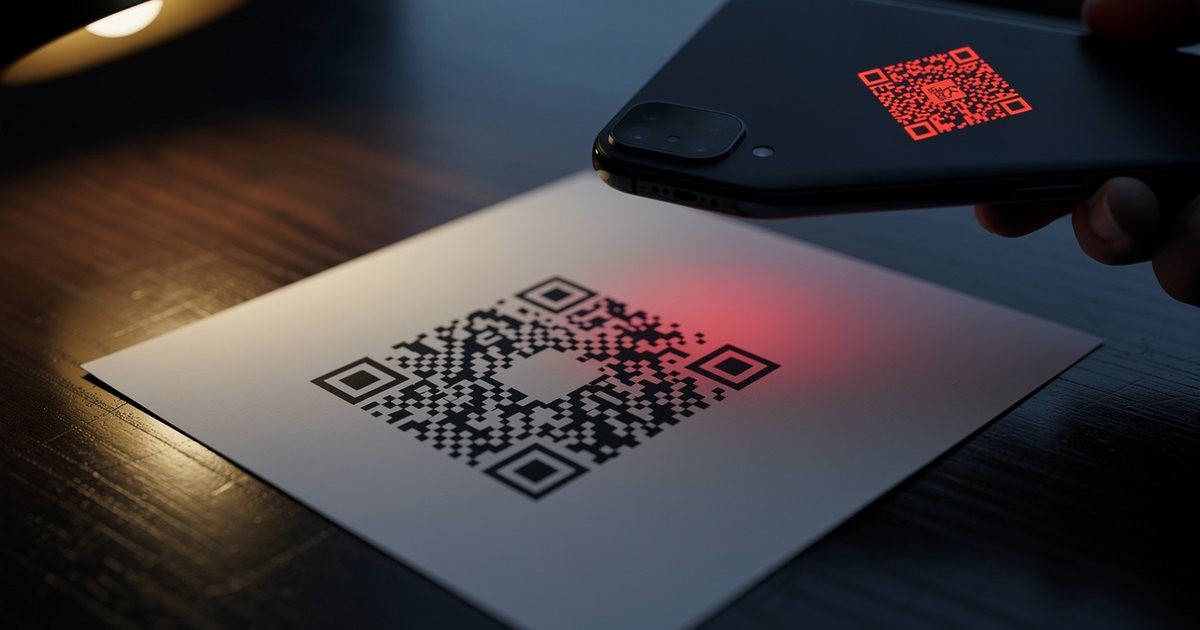
QR code crypto scams work because you can't read a QR code. It's a link with the label torn off. Scan one from a scammer and it can send your money to their wallet, open a fake login page, or ask your wallet to approve something you can't see. The codes now turn up in letters, packages, emails and livestreams, and Kaspersky saw phishing emails carrying malicious QR codes jump more than fivefold in late 2025. Before you scan, ask who put the code there. If you didn't go looking for it, don't let it touch your crypto.
What a bad QR code can do
A QR code holds a bit of text, nothing more. Your phone reads that text and decides what to do with it. With crypto, there are three outcomes scammers want.
- A payment to the wrong address. A wallet address is just text, so a QR code can fill in the destination for you. If someone else made the code, the address is theirs.
- A fake page. The code opens a site that looks like your exchange, your wallet maker or a government agency, and asks you to log in or type your recovery phrase.
- A connection request. Some codes ask your wallet to connect to a site. Approve the wrong request and you can hand over permission to move your tokens. Our guide to wallet drainers explains how those approvals empty wallets.
The FTC warned in December 2023 that QR codes can also install malware, and that scammers make up urgent reasons for you to scan: a missed delivery, an account problem, a deadline.
Five places scam QR codes turn up
1. On a phone screen, next to a crypto ATM
This is the oldest version and still the most expensive. A caller posing as the police, a bank or tech support tells the victim to withdraw cash, find a Bitcoin ATM and scan a QR code the caller sends. The code holds the scammer's wallet address. The FBI flagged the pattern in 2021, and in 2025 its Internet Crime Complaint Center logged 13,460 crypto ATM complaints and $389 million in losses. If this already happened to you, our guide to getting money back after a Bitcoin ATM scam covers what's possible.
2. In a letter from your "wallet company"
In April 2025, people who own Ledger hardware wallets started receiving printed letters demanding a "mandatory" security check by a deadline. A QR code led to a fake site that asked for the 24-word recovery phrase. Ledger confirmed the letters were fake, The Block reported. Later waves used Trezor's name too. Paper feels official, and that's the point. Fake IRS letters use the same trick, as our guide to checking an IRS crypto letter shows.
3. In a package you didn't order
In July 2025, the FBI warned about unsolicited packages with a QR code inside and often no sender details. Curiosity does the rest. You scan to find out who sent it, and the code asks for personal or financial details, or installs software that steals data from your phone. The FBI said this scheme isn't as widespread as others, but if your phone holds a wallet app, one scan is enough.
4. In an email, often inside a PDF
Email filters check links. They're much worse at reading a picture of a link. That's why Kaspersky says attackers put QR codes in the email body or, more often, in a PDF attachment, and why the codes push you to scan with your phone, which may have weaker protection than your computer. A "verify your exchange account" email with a QR code is a phishing email, whatever logo is on it.
5. On a livestream or video
Fake giveaway streams use a QR code on screen so viewers can "send 1, get 2 back" from their phone in seconds. The code holds the scammer's address. Nothing comes back. Our guide to deepfake crypto giveaways covers how these streams borrow famous faces.
⚠ Red flag
No wallet company, exchange or government agency will ask you to scan a code and type your recovery phrase. Ledger's own position, repeated in coverage of the letters, is that it never asks for the 24 words by any channel. A QR code that leads to a recovery phrase box is a theft attempt every time.
A QR code you should scan vs one you shouldn't
QR codes aren't the problem. Plenty of honest ones exist, including the one a friend shows you to receive crypto. What matters is who made the code and who started the conversation.
| Lower risk | Stop and check |
|---|---|
| You asked a friend for their address and they show you the code in person | Someone you've never met sends a code and tells you to pay it |
| You opened your own exchange app and it shows a code to deposit | An email, text or letter tells you to scan to "verify" an account |
| You're on a site you typed in yourself | A code arrived in a package, on a flyer or on a sticker over another code |
| The preview shows the exact address or site you expected | The preview shows a shortened link or a domain you don't recognize |
| No time pressure | A deadline, a threat or a reward if you act fast |
How to scan without getting caught
- Read the preview first. Most phone cameras show the link before opening it. Look at the actual domain, not the logo on the paper. If it's a shortened link or a misspelling, don't tap.
- Don't scan to log in. If a code claims to be from your exchange or wallet, close it and open the app or type the address yourself.
- Check a payment address after scanning. When a code fills in a wallet address, compare it with the one the person gave you through another channel, all the way through, not just the ends. Our free address compare tool checks every character for you.
- Read every wallet request. If your wallet pops up asking to connect, sign or approve after a scan, and you didn't expect it, reject it.
- Never type a recovery phrase after a scan. There's no exception to this one.
- Hang up on anyone who sends you a code to pay. Police, banks and tax agencies don't collect money with QR codes at Bitcoin ATMs.

Rob's take
What I dislike about QR scams is how they flip a good habit. For years we've told people to hover over links and read the address before clicking. A QR code skips that step on purpose. It turns a link nobody can read into a square that looks harmless, and it moves the whole thing to your phone, where your wallet lives. So I treat a code like a stranger handing me a sealed envelope. I don't open it just because it's addressed to me. I ask who sent it, and if I can't answer that, it goes in the trash.
Not sure about a code, a letter or a message? Take our is this a scam? quiz, or browse every guide in the Scams hub.
Keep a copy by the phone. Our free Scam Texts and Emails check covers six messages scammers send crypto holders, and it comes with the Sunday Briefing.
If you scanned a scam QR code
What to do depends on what happened after the scan. If you only opened a page and typed nothing, close it and clear your browser history. If you typed a password, change it at once from the real site and turn on two-factor authentication. If you typed your recovery phrase, treat the wallet as compromised and follow our guide on what to do when a seed phrase is compromised. If you sent crypto, save the transaction ID and the address, and report it at ic3.gov. Our guide on how to report a crypto scam lists the rest.
QR code crypto scam FAQ
Can scanning a QR code steal my crypto?
Scanning alone usually just opens a link or fills in an address. The theft happens at the next step: when you pay the address, type a password or recovery phrase, approve a wallet request, or install something. Stop after the scan and check before you do any of those.
How can I tell if a QR code is fake?
You can't tell by looking at the square. Look at the link preview your camera shows, and ask who made the code. A code you didn't go looking for, from someone you don't know, deserves the most suspicion.
Is the Ledger letter with a QR code real?
Letters asking Ledger or Trezor owners to scan a code and complete a security check have been confirmed as scams since April 2025. No wallet maker asks for your recovery phrase. Don't scan the code, and contact the company through its own website if you're worried.
Why do scammers use QR codes at Bitcoin ATMs?
The code puts the scammer's wallet address into the machine without the victim typing it. The cash becomes crypto and lands in the scammer's wallet within minutes. The FBI has warned about this pattern since 2021.
What happens if I scan a QR code from an unknown package?
The FBI says these codes can lead to sites that ask for personal and financial details, or to software that steals data from your phone. If you scanned one, don't enter anything, delete anything it installed, and report it at ic3.gov.
Are QR codes for receiving crypto unsafe?
No. A code that a person you know shows you, or that your own exchange app displays, is a normal way to share an address. Still compare the address after scanning, because a code can be swapped.
New to all this? Our free course Scam-Proof in 7 Days walks you through the checks one short lesson at a time.